Factory on the move!
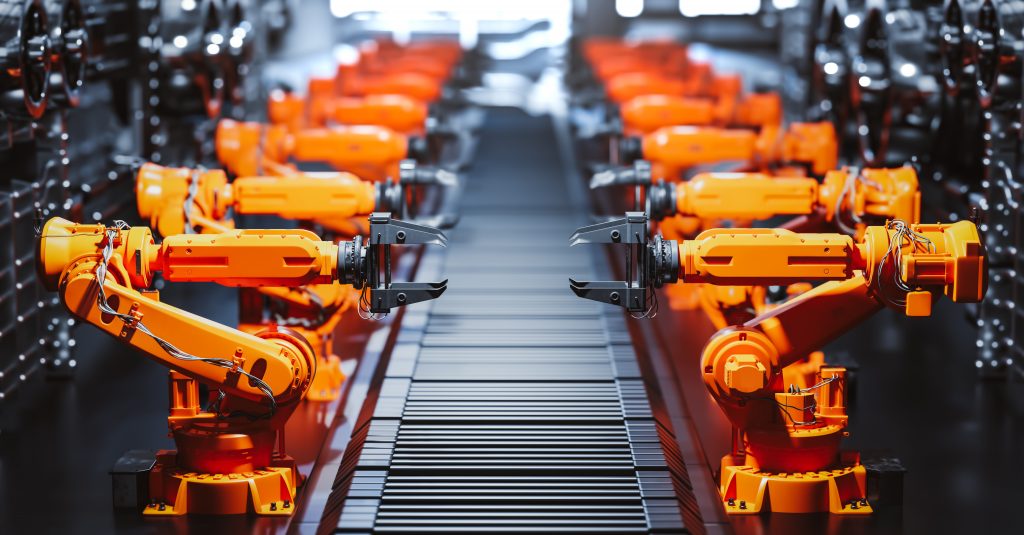
A customer, a multinational, was going to close a production location and the production machines were distributed to other factories worldwide.
In addition to the move, product changes were also implemented. So a number of machines were also partially renovated to achieve more sustainable packaging.
In many cases, renovations had to be made to the factory hall at the receiving locations to make room for the new shipped production lines.
I was asked if I could create planning scenarios.
The most important condition: the supply of products to supermarkets should not be jeopardized.
Step 1:
To check whether I had properly understood the hour and a half briefing (of what had to go where), I had made a one-pager with all the movements. A simple block graph with arrows and the change in machine/product during the move.
I couldn’t have imagined what this one piece of A4 could do!
A heated discussion arose between 2 Senior Supply Chain Directors who, as it turned out, had had a different view of part of the transition for weeks.
One person told me that I had not understood it correctly, while my client stated that I had recorded this correctly.
Marketing also raised many questions about changes to packaging that were not properly understood. There was also miscommunication there, resolved with a concrete block schedule.
That picture therefore turned out to be crucial to get all stakeholders in line with the asset movements.
Step 2:
Together with Supply Chain Engineers, the one-pager was converted into a Microsoft Project Planning, with which I could visualize the different scenarios for the stakeholders.
For example, they indicated how long production had to continue before the stock level was sufficient to continue supplying the supermarkets; how long would it take to dismantle the production line, then pack it, ship it, have parts overhauled in parallel, send it back, adjust the factory hall at the receiving location, rebuild the machines, test, test, test and then first production at the new location.
Quite a puzzle to globally plan stock, dismantling of machines, shipping, installation, SAT (Site Acceptance Tests) and restarting production, etc. at 6 sites worldwide.
Unfortunately, I did not experience the further preparation and implementation of this major project, because the permanent employee then became available to manage the project. I was there purely to absorb the first weeks.